
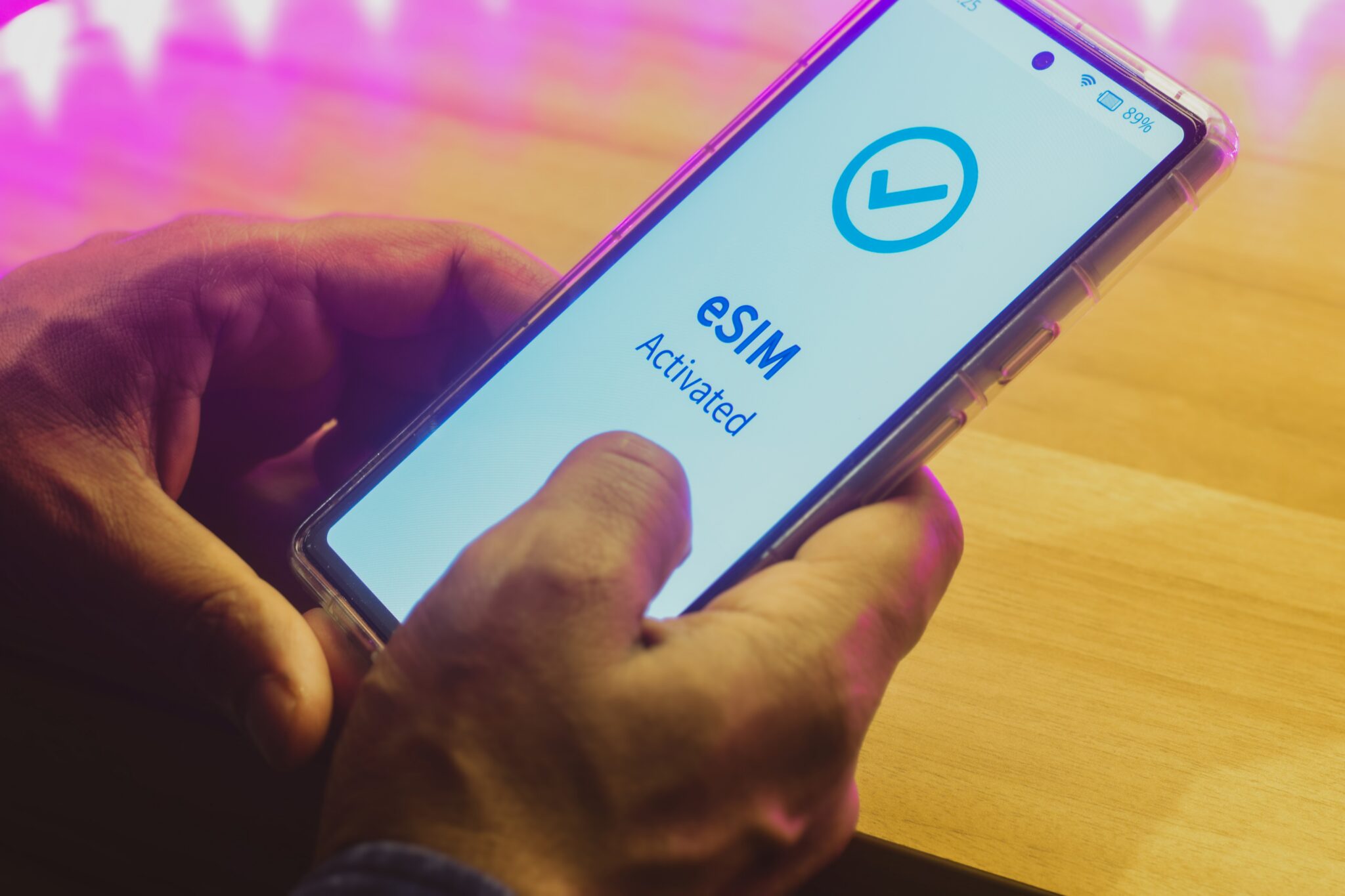
The way businesses stay connected is changing rapidly, and eSIM technology is leading the transformation. As remote work, global mobility, and digital-first operations continue to grow, companies are looking for more flexible and scalable mobile connectivity solutions. eSIM adoption is no longer just a consumer trend; it is becoming a strategic business advantage.
From simplifying device management to reducing international roaming costs, eSIM technology is reshaping how organizations manage communications across smartphones, tablets, laptops, and IoT devices.
What Is an eSIM?
An eSIM, or embedded SIM, is a digital SIM card built directly into a device. Unlike traditional physical SIM cards, eSIMs can be activated remotely and switched between carriers without physically replacing hardware.
Major device manufacturers such as Apple, Samsung, and Google have accelerated adoption by integrating eSIM support into smartphones, tablets, and wearables.
According to the GSMA, global eSIM smartphone penetration is expected to double throughout 2026 and continue expanding rapidly through 2030. GSMA Intelligence predicts that eSIM-enabled smartphone connections could reach billions globally within the next few years.
Why Businesses Are Embracing eSIM Technology
Businesses today operate in increasingly mobile environments. Employees work remotely, travel internationally, and rely on multiple devices to stay productive. Traditional SIM cards often create unnecessary friction in managing these operations.
eSIM technology addresses several key business challenges.
Simplified Device Management
One of the biggest advantages of eSIM adoption is centralized device provisioning. IT teams can remotely activate, update, or switch mobile plans without handling physical SIM cards.
This becomes especially valuable for:
- Remote teams
- Field employees
- International staff
- Hybrid workforces
- Large enterprise deployments
The GSMA eSIM deployment report highlights how enterprises are increasingly automating eSIM provisioning through mobile device management (MDM) platforms, eliminating manual activation processes and reducing IT overhead. For growing businesses, this means faster onboarding, easier scalability, and reduced operational complexity.
Lower International Roaming Costs
Business travel remains a major expense category for many organizations. Traditional roaming plans can quickly become expensive, particularly for global teams.
eSIM technology allows users to instantly switch to local or regional mobile plans without purchasing physical SIM cards. This flexibility significantly lowers roaming costs while improving connectivity abroad.
Travel-focused eSIM providers have seen explosive growth as international business travelers seek more affordable and seamless connectivity solutions.
For companies with distributed workforces, eSIMs provide a practical way to maintain reliable communications while controlling expenses.
Better Support for Remote and Hybrid Work
The modern workforce is no longer tied to a single office location. Employees frequently work from home, coworking spaces, airports, hotels, and client locations.
Research on remote work trends shows that flexible work environments continue to reshape how employees travel and communicate.
eSIM technology supports this shift by enabling:
- Instant network switching
- Flexible mobile connectivity
- Multi-device communication
- Faster setup for remote employees
Instead of waiting for hardware shipments or IT provisioning delays, employees can activate service digitally within minutes.
Increased Flexibility with Dual SIM Capabilities
Many eSIM-enabled devices also support dual SIM functionality, allowing users to maintain separate business and personal numbers on a single device.
This is especially valuable for:
- Remote employees
- Sales teams
- Executives
- International travelers
- BYOD (Bring Your Own Device) environments
Employees can manage work and personal communications separately without carrying multiple phones, improving convenience and productivity.

eSIM Adoption in IoT and Connected Devices
While smartphones drive much of the public conversation around eSIMs, the technology is also transforming IoT (Internet of Things) deployments.
Industries including logistics, transportation, healthcare, manufacturing, and smart infrastructure increasingly rely on connected devices that require scalable connectivity management.
According to reports highlighted by TechRadar Pro, enterprise IoT is expected to become one of the largest drivers of eSIM growth over the next several years.
Businesses benefit from:
- Remote provisioning of IoT devices
- Reduced maintenance costs
- Simplified carrier management
- Improved scalability
- Better global connectivity
The introduction of new GSMA standards such as SGP.32 is helping enterprises manage large-scale IoT eSIM deployments more efficiently.
Connected vehicles are another rapidly growing category. Industry experts predict that eSIM-enabled cars will continue expanding as vehicles become mobile workspaces with integrated connectivity services.
Security and Compliance Benefits
Security remains a top concern for businesses adopting new technologies. eSIMs offer several advantages over traditional physical SIM cards.
Because eSIMs are embedded directly into devices, they:
- Cannot be easily removed or swapped
- Reduce physical tampering risks
- Support remote security management
- Improve authentication controls
Researchers are even exploring how telecom-grade eSIM infrastructure could support secure identity management for AI systems and enterprise automation in the future.
As cybersecurity threats continue to increase, businesses are placing greater importance on secure mobile connectivity solutions that can be managed centrally.
Challenges Slowing eSIM Adoption
Despite strong momentum, some barriers still exist.
Carrier Support Limitations
Although most major carriers now support eSIM, the activation experience still varies widely between providers.
The GSMA Intelligence forecast notes that many operators still need to improve customer education and simplify onboarding processes.
Consumer Awareness
Many users still do not fully understand how eSIM technology works or its advantages compared to physical SIM cards.
However, awareness is increasing rapidly as more devices launch without physical SIM trays.
Legacy Infrastructure
Some organizations still rely on outdated mobile management systems that were not designed for remote provisioning or digital carrier management.
Transitioning to modern mobility management platforms may require additional investment and planning.
The Future of eSIM Technology
Industry analysts increasingly view 2026 as a major turning point for eSIM adoption. What began as a convenience feature is quickly becoming foundational infrastructure for mobile connectivity.
The global shift toward:
- Remote work
- Cloud communications
- IoT deployments
- Digital transformation
- Mobile-first business operations
is accelerating demand for flexible and scalable connectivity solutions.
The GSMA Mobile Economy 2026 report projects continued growth across mobile technologies, AI, 5G, and eSIM-enabled ecosystems through the end of the decade.
For businesses, adopting eSIM technology is no longer simply about convenience. It is about building a more agile, scalable, and globally connected workforce.
Organizations that embrace eSIM early may gain advantages in operational efficiency, employee mobility, and cost management as digital communications continue evolving.
eSIM adoption is rapidly moving from early adoption to mainstream business deployment. As device manufacturers, carriers, and enterprises continue investing in digital connectivity infrastructure, eSIM technology is poised to become the standard for modern mobile communications.
Businesses looking to improve flexibility, simplify mobile management, support remote work, and reduce international connectivity costs should closely monitor the continued evolution of eSIM technology.
The future of business mobility is increasingly digital, and eSIM is helping lead the way.