
The right VoIP system can give startups enterprise-level communication tools without the enterprise-level cost.
- Cut costs and launch fast with a simple, no-hardware setup.
- Build credibility with local, toll-free, and custom business numbers.
- Stay connected anywhere with mobile apps, video meetings, and voicemail-to-email.
- Scale confidently with analytics, integrations, and flexible pricing plans.
Don’t settle for “just a phone line.” Choose a VoIP system that grows with your startup from day one.
Communication is a competitive edge for small businesses, and especially startups. Whether you’re closing your first deal, hiring your third developer, or setting up remote work across time zones, the right phone system can make all the difference. VoIP for startups brings big-business features without the heavy hardware or sky-high price tag, giving small teams flexibility, scalability, and professional polish from day one.
Small businesses that switch to VoIP solutions often see a 30–50% reduction in their phone and communication costs compared to legacy systems. But the choices are many, with auto attendants, AI transcription, mobile apps, routing rules, and number types to consider. It’s easy to get overwhelmed. We’ll walk you through the top 10 features every startup phone system should include, why each one matters, and how to pick a provider that grows with you.
Whether you’re comparing startup phone systems for the first time or looking to level up your setup, these pointers will help you get more value, fewer headaches, and avoid paying for stuff you don’t need.
Why Choose VoIP for Startups?
Voice over Internet Protocol (VoIP) is simply a way to make and receive calls over the internet instead of relying on traditional phone lines. Rather than paying for clunky hardware and long contracts, you can set up a professional phone system that runs on devices you already own, including laptops, tablets, and smartphones.
Startups need to look professional from day one, even if the “office” is a kitchen table or a co-working space. A VoIP system makes that possible with features like dedicated business numbers, call routing, video meetings, and voicemail-to-email. Just as importantly, it scales smoothly. You can add users and features as you grow without disrupting operations.
VoIP for startups gives businesses greater flexibility, lower costs, and richer features than traditional phone service, all benefits that are especially vital for startups competing with limited budgets.
What 10 Features Should Every VoIP System for Startups Include?
When you’re running lean, every tool in your stack has to pull its weight. A VoIP system helps your team appear professional, collaborate smoothly, and stay responsive without blowing the budget. The right features can mean the difference between winning a customer and missing an opportunity.
Here are the ten must-have VoIP features that form the backbone of modern startup phone systems. Each one is designed to save time, cut costs, boost professionalism, or sometimes all three. From simple setup to advanced analytics, here’s what to look for in your next small business VoIP provider.
1. How Easy Should Setup Be for a Startup VoIP System?
For startups, time is the one resource you can’t afford to waste. Your VoIP system should be quick to launch and simple enough to manage without an IT department. The best solutions let you pick a plan, choose a number, and start taking calls within minutes without any special hardware or complex wiring.
Most modern platforms let you link your new business number to devices you already use. If you want physical phones later, many providers also support affordable, plug-and-play IP phones. The key is flexibility: you can start with a lean setup and layer on features or devices as your business grows.

Quick takeaway: A startup-friendly VoIP system should be fast to set up, work with devices you already own, and scale as you add users.
2. What Types of Phone Numbers Help Startups Build Credibility?
The number you use to answer calls says more about your business than you might think. A local area code helps you build trust with customers in your community, while a toll-free number signals that you’re ready for business on a national scale. For branding, custom or “vanity” numbers make your business easy to remember and recommend.
Startups also need the freedom to adapt as they grow. Flexible VoIP systems allow you to start with one local or toll-free number, add custom numbers as your marketing campaigns expand, or provide overseas customers with a “local” global number that routes directly to your team. And if you already have a business number, porting it to your VoIP provider ensures continuity without disruption.
For early-stage businesses, credibility and accessibility are essential. The right mix of numbers helps you project professionalism, meet customers where they are, and scale your reach without overcomplicating your setup.
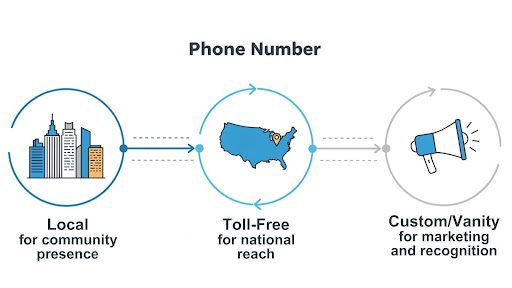
Quick takeaway: Choose a system that gives you options (local, toll-free, custom, and global numbers) so your phone presence grows in step with your startup.
3. Why Are Auto Attendants and Call Routing Rules Essential?
When you’re a small team, you can’t afford to miss calls or waste time manually transferring them. Auto attendants act as a virtual receptionist, greeting callers with a professional message and guiding them to the right extension. Think of it as a first impression that’s always polished, even if no one is free to pick up the phone.
Call routing rules take that professionalism further. You can set up your system to forward calls based on business hours, team availability, or caller location. For example, sales calls can route to your co-founder during the day, and after-hours inquiries can go straight to voicemail or a live receptionist service. This flexibility ensures you never leave prospects hanging and that your team stays focused instead of constantly fielding misdirected calls.
For startups, this automation saves precious time while making your business look bigger and more established than it is. It’s also a scalable foundation since you can add new rules and extensions as your team expands.
Quick takeaway: Auto attendants and smart call routing keep your startup looking professional and ensure every caller reaches the right person, every time.
4. How Do Mobile and Web Apps Keep Startup Teams Connected?
Startups rarely work from a single office. Your developer might be in another city, your marketing lead on the road, and you juggling meetings from a coffee shop. Mobile and web apps are a must-have in any modern VoIP system for startups. They let you take calls, send texts, check voicemail, and join video conferences from anywhere with an internet connection.
These apps also separate business and personal communication on the same device, so you don’t need to give out your personal number. With features like visual voicemail, SMS/MMS from your business line, and a personal conference bridge for quick team huddles, apps make it easy to stay connected and responsive.
Your business remains accessible and professional, while your team enjoys the flexibility to work from anywhere without missing opportunities.
Quick takeaway: Mobile and web apps let startups run their entire phone system from any device, keeping teams connected and customers supported on the go.
5. What Role Do Video Meetings Play in a Startup Phone System?
Startups often run on distributed teams, contractors, or advisors spread across cities. Having video meetings built into your startup phone system keeps collaboration simple and seamless. Instead of juggling multiple tools, you can launch a video call right from the same platform you use for voice and messaging.
Integrated video conferencing supports screen sharing, document collaboration, and in-meeting chat, so your team can brainstorm, review proposals, or pitch investors without switching apps. Many systems also include features like recording, branded meeting rooms, and strong security (such as AES 256-bit encryption) to keep conversations private.
When you can instantly spin up a reliable, secure video call, you show partners and customers that your business is organized and ready to deliver.
Quick takeaway: Video meetings inside your VoIP system let startups collaborate effectively, save time, and look professional in every conversation.
6. How Can Voicemail-to-Email and Transcription Save Time?
Every startup founder knows the pain of missed calls, whether you’re pitching, coding, or in back-to-back meetings. Voicemail-to-email and transcription are valuable VoIP features. Instead of dialing in to check messages, voicemails arrive in your inbox as audio files or text transcripts.
You can scan messages quickly, prioritize urgent calls, and instantly share details with teammates. For example, if an investor leaves a callback number, the transcript saves you from replaying the message three times to write it down. And because messages live in your email, you don’t risk losing them if your phone is unavailable.
Quick takeaway: Voicemail-to-email and transcription let startups respond faster, stay organized, and never miss important details.
7. Why Do Startups Need Call Recording, Analytics, and CRM Integrations?
In the early days of a startup, every conversation counts. Whether it’s a customer inquiry, sales pitch, or support call, recording and analyzing those interactions helps you improve and grow. Call recording ensures you don’t miss key details, while analytics reveal patterns like peak call times, missed-call rates, and customer sentiment.
When paired with CRM integrations, those insights become even more powerful. Calls can automatically log into your CRM, saving your team from manual data entry and ensuring your pipeline stays accurate. Over time, this data shows you which campaigns generate leads, how quickly your team responds, and where communication bottlenecks might be slowing growth.
For startups, these tools are essential for scaling operations and making data-driven decisions. By tying conversations directly to outcomes, you’ll understand what works, what doesn’t, and how to adapt quickly.
Quick takeaway: Recording, analytics, and CRM integrations turn startup conversations into measurable insights that fuel smarter growth.
8. How Do AI-Powered Answering Services Support Small Teams?
Startups can’t afford to let calls slip through the cracks, but founders and small teams don’t always have time to answer every ring. AI-powered answering services and live receptionist options bridge that gap. They greet callers professionally, route calls to the right person, take messages, and schedule appointments, ensuring your business stays responsive around the clock.
For lean teams, these services are a lifesaver. Instead of hiring full-time staff, you can rely on cost-effective AI or live agents to cover after-hours inquiries, manage call overflow, or capture leads while you focus on core work. Features like 24/7 availability, appointment booking, and personalized greetings mean callers always feel taken care of, even if no one on your team is available.
This combination of automation and human support keeps your startup looking professional, prevents missed opportunities, and buys you valuable focus time.

Quick takeaway: AI and live answering services give startups enterprise-level customer responsiveness without the cost of full-time staff.
9. What Security and Compliance Features Protect Startups?
Startups may be small, but they still handle sensitive information. A good VoIP system should include built-in safeguards like encryption, secure access controls, and spam call protection. These features protect both your business and your customers from risks like fraud or data breaches.
Compliance matters too. Emergency calling (E911) ensures that emergency services can locate you quickly, no matter where your team is working from. For healthcare or professional services, HIPAA-compliant voice and video keep you on the right side of industry regulations. Even if you don’t operate in a regulated industry, having compliance-ready features signals that your business takes security seriously.
By choosing a system with compliance and security built in, you can focus on growth instead of worrying about vulnerabilities.
Quick takeaway: Look for VoIP systems with encryption, E911, and HIPAA compliance to keep your startup’s communications secure and trustworthy.
10. How Can Startups Control Costs with Scalable VoIP Plans?
For startups, every dollar counts. Your VoIP system should offer flexible pricing that scales with your needs. Instead of locking you into expensive bundles, look for plans that let you mix and match user types. Heavy users can access advanced features like analytics or recording, while field staff stick to the basics.
This approach prevents overspending while giving your team the tools they need. For example, one founder might need call recording and CRM integrations, while another teammate only needs a mobile app and voicemail. Scalable VoIP plans also let you add or remove users easily, which is ideal for seasonal demand or fast-changing startup teams.
The best systems make it easy to start small and expand gradually without surprise fees or long contracts. You can invest confidently in communications, knowing you’ll always have the option to adjust as your startup grows.
Quick takeaway: Scalable, mix-and-match VoIP plans keep costs low and give startups the flexibility to grow without financial strain.
How Do You Choose the Best Startup Phone System?
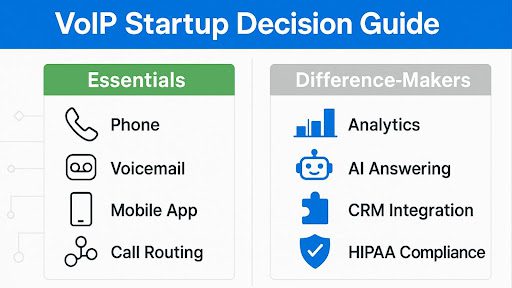
With so many options available, the hardest part is choosing the right setup for your team. The key is knowing which small business VoIP features are absolute must-haves and which ones are difference-makers depending on your stage of growth.
Table-Stakes Features (Essentials every startup needs):
- Easy setup with no hardware
- Local or toll-free business numbers
- Auto attendant and call routing rules
- Mobile/web apps for remote work
- Voicemail-to-email and transcription
Difference-Maker Features (Add as your business grows):
- Advanced analytics and call recording
- CRM integrations for automated tracking
- AI-powered answering or live receptionist services
- HIPAA-compliant video meetings
- Scalable, mix-and-match pricing options
A Step-by-Step Approach for Startups
- Identify your core needs: Do you need a single line or multiple numbers? Do you handle sensitive data?
- Prioritize must-haves: Make sure essentials like call routing, voicemail-to-email, and mobile apps are included from day one.
- Consider future growth: Look for scalability so you can add advanced features like AI receptionists or integrations without switching providers.
- Test before you commit: Most services offer trials or money-back guarantees. Use these to see if the system fits your workflow.
Start small with the essentials, then layer on advanced features as your startup scales.
Frequently Asked Questions About VoIP for Startups
How soon should a startup invest in a VoIP system? You don’t need to wait until you’ve scaled to 20 employees to adopt VoIP for startups. Setting it up early can save time and costs later by avoiding a disruptive transition. Even solo founders benefit from appearing professional and keeping business and personal numbers separate from day one.
Can a VoIP system support both remote and in-office team members? Yes. VoIP is built for flexibility, which makes it ideal for hybrid startups. Remote workers can use mobile and web apps, while in-office staff can connect with desk phones or headsets. Everyone still shares the same unified system, which keeps communication consistent and professional.
What’s the biggest hidden cost startups should watch out for with VoIP? While VoIP is generally affordable, startups should be aware of add-on fees for outbound text messaging registration, premium global numbers, or advanced features like call recording. Choosing a provider that’s transparent about costs helps you plan without surprises.
How does VoIP help startups look more credible to investors and customers? A professional phone system signals that your business is serious and ready to grow. Features like branded numbers, auto attendants, and reliable customer service tools show investors and clients that you’re operating with structure and scalability in mind.
Ready to Future-Proof Your Startup Communications?
Strong communication is one of the cornerstones of startup success. The right VoIP system ensures you never miss an opportunity, keeps your team connected wherever they are, and scales with your business as it grows. From essential features like auto attendants and voicemail-to-email to advanced tools like AI-powered answering and analytics, you now know what to look for when evaluating providers.
At Phone.com, we’ve built our service with startups and small businesses in mind. You get the professional features of an enterprise phone system without the cost or complexity. Our 24/7 support and more than 50 included features make it easy to stay connected, look professional, and focus on building your business. Explore our plans today and see how Phone.com can simplify your startup communications.