
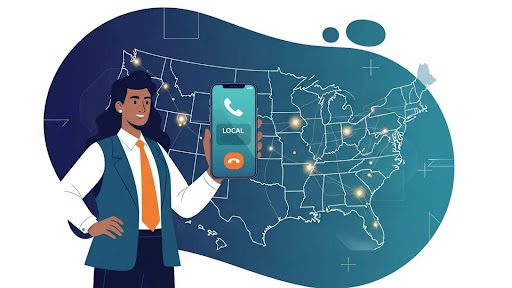
The area code you select for your virtual phone number directly impacts customer trust, answer rates, and your brand’s perceived presence in any market.
- Callers are more likely to answer calls from familiar local area codes than unknown or toll-free numbers.
- Local numbers build community credibility, while toll-free numbers project national reach.
- Modern virtual phone systems let you establish a presence in any city without opening physical offices.
- The best strategy often involves combining local and toll-free numbers for different business functions.
Choose a virtual phone number area code that matches where your customers are located, not where your business headquarters is.
Your phone number says something about your business before anyone picks up. A contractor in Denver calling prospects with a Miami area code creates instant confusion. A nationwide e-commerce brand using a small-town prefix might seem less established than competitors. The virtual phone number area code you select shapes first impressions, influences whether people answer your calls, and determines how accessible your business feels to customers across different regions.
Small business owners often overlook this decision, treating it as an administrative checkbox rather than a strategic choice. Companies can improve their answer rates by 40% by establishing a presence through local area codes. That statistic alone should prompt careful consideration of which digits will represent your company on caller IDs everywhere.
Whether you serve customers across the street or across the country, understanding how area codes influence perception helps you make smarter decisions about your business communication.
How Can You Choose a Virtual Phone Number Area Code That Works for Your Business?
Selecting the right virtual phone number area code starts with understanding your customer base. Where do most of your clients actually live? If you operate a home services company in Chicago, a 312 or 773 area code immediately signals local availability. If you run an online coaching practice serving clients nationwide, the calculation changes entirely.
Geography matters less than psychology in this decision. When someone sees an incoming call from their own area code, their brain registers familiarity before conscious thought kicks in. This recognition triggers what psychologists call the “mere exposure effect,” where people naturally prefer things they recognize over unfamiliar alternatives. For businesses relying on phone communication, this psychological advantage translates directly into higher answer rates and more productive conversations.
Virtual phone systems have eliminated the old requirement of physical presence to obtain specific area codes. A software developer working from a cabin in Montana can maintain a virtual phone number with a Silicon Valley 408 prefix. A freelance consultant in rural Texas can project a Manhattan 212 presence when targeting New York clients. The technology exists to match your phone number to your market rather than your mailbox.
Why Does Area Code Choice Matter?
The three digits at the start of your business phone number carry surprising weight in customer decision-making. Research reveals that approximately 37% of people would hesitate to contact a professional service displaying an unfamiliar or distant area code. For businesses where phone calls drive revenue, that hesitation represents real money left on the table.
Area codes function as geographic shorthand in the public consciousness. Certain prefixes carry associations with major metropolitan areas, business credibility, or regional identity. The 212 area code evokes New York City prestige. The 310 suggests Los Angeles entertainment industry connections. The 415 signals San Francisco tech scene proximity. These associations develop over decades of cultural exposure through media, entertainment, and everyday communication.
Beyond perception, practical considerations influence area code importance. Some customers still associate long-distance calling with higher costs, even though modern cell phone plans typically include unlimited domestic calling. Older demographics may feel more comfortable calling numbers that appear local, removing any subconscious hesitation about potential charges.
For businesses expanding into new territories, choose phone area codes that provide an affordable way to establish a local presence without opening satellite offices. A real estate agent based in Phoenix can advertise a Tucson number for Southern Arizona listings and a Flagstaff number for northern properties, routing all calls to a single device while appearing locally accessible to each market.
Local Numbers: How to Build Community Trust One Call at a Time
Local phone numbers create an immediate sense of accessibility and community connection. When customers see a familiar area code, they perceive the business as nearby, available, and invested in their specific region. This perception holds true even when the business owner works remotely or from a different location entirely.
The trust factor associated with local numbers proves particularly valuable for service-oriented businesses. Homeowners hiring contractors prefer knowing their electrician or plumber operates locally. Patients seeking healthcare providers feel more comfortable with practices displaying area codes they recognize. Legal clients often prioritize attorneys who appear geographically accessible for in-person consultations, even if most communication happens by phone.
Local numbers also support regional marketing efforts more effectively. Businesses running targeted advertising campaigns can include market-specific phone numbers that reinforce their presence in particular areas. A moving company might use different numbers in promotional materials for each metro area it serves, tracking which campaigns generate the most calls while presenting localized credibility to each audience.
Advantages of Choosing Local Area Codes
Local numbers offer practical benefits worth considering. They typically cost less than premium toll-free options, with many business phone services including local numbers in base subscription packages. Local numbers also support local SEO efforts, as consistent contact information across business directories helps improve visibility in geographically targeted search results.
The informal nature of local numbers can work in your favor for certain industries. Creative professionals, consultants, and boutique service providers often benefit from appearing approachable rather than corporate. A local number suggests a personal touch and direct access rather than layers of customer service automation.
Local vs Toll-Free Number: When Does National Reach Take Priority?
While local numbers excel at building regional trust, toll-free options serve different purposes. Understanding local vs toll-free number options helps businesses choose based on their specific circumstances and growth plans.
Toll-free numbers remove calling costs from customer considerations entirely. Although most people now have unlimited domestic calling, the perception of toll-free as “free to call” persists. More importantly, toll-free prefixes like 800, 888, and 877 signal established, professional operations. They suggest a business prepared to handle volume, offer customer support, and operate beyond neighborhood boundaries.
The tradeoff involves perception complexity. Toll-free numbers work wonderfully for inbound customer service lines where callers already know and trust the business. However, outbound calls from toll-free numbers often get screened or ignored. Recipients frequently assume toll-free incoming calls are telemarketing, robocalls, or spam.
This distinction suggests a hybrid approach that many successful businesses employ. Use toll-free numbers for customer support lines, website contact forms, and national advertising. Use local numbers for outbound sales calls, appointment reminders, and regional marketing. This combination maximizes both accessibility and answer rates across different communication contexts.
When Toll-Free Numbers Make Strategic Sense
Certain business models clearly benefit from toll-free presence. E-commerce companies serving national customer bases need easily remembered contact options. Software companies offering technical support want callers to reach help without hesitation. Any business running national advertising campaigns needs memorable numbers that work across all markets.
Vanity toll-free numbers add another dimension to consider. Numbers spelling words or phrases, like 1-800-FLOWERS or 1-888-CONTACTS, provide built-in memorability. If brand recall matters to your marketing strategy, the premium cost of vanity options may justify itself through improved response rates and easier word-of-mouth referrals.
What Key Factors Should You Consider When Selecting Your Virtual Phone Number Area Code?
Choosing your area code requires balancing multiple considerations. Here are the essential factors that should guide your decision:
- Primary customer location: Match your area code to where most customers actually live. If 80% of your clients come from a specific metro area, that area code builds the strongest trust signals.
- Industry expectations: Some industries carry regional associations that area codes can reinforce. Financial services in New York, entertainment in Los Angeles, technology in San Francisco. Aligning with these expectations can boost perceived credibility.
- Growth trajectory: Consider where your business is heading, not just where it operates today. If expansion into new markets seems likely, plan for multiple numbers from the start rather than retrofitting later.
- Call direction: Businesses primarily receiving inbound calls have different considerations than those making outbound calls. Inbound-focused operations benefit more from toll-free accessibility, while outbound-focused teams need local numbers for answer rates.
- Marketing integration: Think about how phone numbers appear in your advertising, website, social media, and business cards. Multiple numbers serving different purposes work well when clearly organized but confuse customers when poorly implemented.
- Competitor analysis: Research which area codes competitors use in your target markets. Matching local presence or differentiating with national toll-free options both represent valid strategies, depending on your positioning.
Virtual Number for Different Cities: How Do You Expand Your Geographic Footprint?
One of the most powerful applications of virtual phone systems is establishing presence across multiple markets. Businesses can obtain virtual numbers for different cities, creating the appearance of local offices without physical infrastructure.
This capability transforms how small businesses approach geographic expansion. A marketing agency in Atlanta can advertise local numbers for Dallas, Houston, and Austin when pursuing Texas clients. A consulting firm in Boston can maintain Chicago and Los Angeles numbers for Midwest and West Coast prospects. All calls route to the same team, same devices, and same systems, but customers experience local accessibility.
The strategy works particularly well for service businesses where initial consultations happen by phone before any in-person meetings. Legal services, financial advising, coaching, and professional consulting all benefit from appearing locally present during the critical first-contact phase. By the time clients understand the consultant works remotely, the relationship has already begun building trust through competent service delivery.
Managing Multiple Area Codes Effectively
Operating with virtual numbers for different cities requires organizational clarity. Callers should never feel confused about who they’ve reached or where the business actually operates. Train team members to answer calls appropriately based on which number rang, and ensure your phone system identifies the originating number for each incoming call.
Track performance across different numbers to understand which markets respond best. Some regions may show higher answer rates, longer conversation times, or better conversion percentages. This data helps refine marketing investments and expansion priorities over time.
Consider seasonal variations in how you deploy numbers. Businesses with geographic seasonality might emphasize different area codes during different times of the year. A tax preparation service might push Florida numbers heavily in January when snowbirds seek local services, then shift emphasis elsewhere as seasons change.
Frequently Asked Questions About Virtual Phone Number Area Codes
Can I choose any area code I want for my virtual business number? Yes, virtual phone systems allow selection from any available area code regardless of your physical location. You can establish a 212 New York number while working from Denver, or maintain a 310 Los Angeles presence from your home office in Atlanta. The only limitations involve number availability, as popular area codes in major metros sometimes have fewer options than less sought-after regions.
Should my business have both local and toll-free numbers? Many successful businesses maintain both types. Toll-free numbers work well for customer service lines, website contact information, and national advertising where memorability and professionalism matter most. Local numbers perform better for outbound calling, regional marketing campaigns, and building trust with geographically defined customer bases. The hybrid approach maximizes both accessibility and answer rates.
How do area codes affect my business credibility with customers? Area codes carry geographic associations that influence first impressions before any conversation begins. Local area codes suggest accessibility, community investment, and personal service. Toll-free numbers signal established operations, national reach, and professional infrastructure. Matching your area code choice to customer expectations and industry norms strengthens credibility, while mismatches can create initial hesitation or skepticism.
What happens if I move my business to a different city? With virtual phone numbers, relocation changes nothing about your phone presence. Keep your existing numbers active regardless of where you physically work, maintaining continuity for customers and avoiding the hassle of updating contact information across all your marketing materials. This flexibility is one of the primary advantages of cloud-based business phone systems over traditional landlines.
Choose the Right Area Code and Start Connecting With Customers
The virtual phone number area code you choose should reflect where your customers are, how you want your business perceived, and what communication patterns drive your success. Local numbers build trust in specific markets. Toll-free options project national credibility and accessibility. Many businesses benefit from combining both types to maximize effectiveness across different situations.
Modern business phone systems make obtaining numbers from any area code remarkably simple. Within minutes, you can establish local presence in markets across the country, set up professional toll-free lines for customer support, and route everything to devices your team already uses. Phone.com offers small businesses the flexibility to select from local, toll-free, and custom numbers that match their specific needs. Get started by exploring plans and pricing to find the right fit for your communication strategy.