
Virtual phone numbers are legitimate, secure business communication tools when obtained from reputable providers.
- Modern virtual phone systems use advanced encryption (TLS, SRTP) to protect call data from interception.
- Reputable providers comply with industry standards like HIPAA and offer two-factor authentication.
- Virtual numbers provide privacy advantages by keeping your personal number separate from business communications.
- The key to safety lies in choosing a provider with transparent security practices and strong compliance certifications.
To maximize protection, evaluate providers based on their encryption standards, compliance history, and customer support before making a decision.
Virtual phone numbers have become essential tools for entrepreneurs and growing companies, with the global VoIP market reaching $144.77 billion in 2024 and projected to more than double by 2032. Small businesses across every industry are discovering the unique advantages that virtual phone systems offer over conventional setups.
Yet as more companies adopt this technology, a critical question surfaces: Are virtual phone numbers safe and legitimate? The short answer is yes, virtual numbers from reputable providers are both safe and completely legitimate. Understanding the technology behind them, the security measures that protect them, and how to choose a trustworthy provider will help you communicate with confidence.
What Makes a Virtual Phone Number Legitimate?
Before addressing security concerns, it helps to understand what virtual phone numbers actually are and why they’ve become standard business tools. A virtual number operates through Voice over Internet Protocol (VoIP) technology, routing calls over the internet rather than traditional copper phone lines. These numbers function exactly like traditional business lines from the caller’s perspective, but they offer far more flexibility for the business owner.
Virtual numbers have been around for decades and are used by businesses of every size, from solo entrepreneurs to Fortune 500 companies. They’re regulated by the same telecom authorities that oversee traditional phone services, making them completely legitimate for business use. The Federal Communications Commission (FCC) applies the same consumer protection rules to VoIP services as traditional phone carriers, ensuring accountability and service standards.
What distinguishes virtual numbers from traditional lines is their flexibility. You can choose a local area code regardless of your physical location, answer calls on any internet-connected device, and access advanced features that would cost thousands with legacy phone systems. For small businesses looking to establish professional business communication, virtual phone numbers provide enterprise-level capabilities at accessible price points.
How Does Virtual Telephone Security Work?
The safety of virtual phone numbers depends on two primary factors: the underlying technology and the security measures your provider implements. Understanding both helps you make informed decisions about your business communications.
Encryption Protects Your Conversations
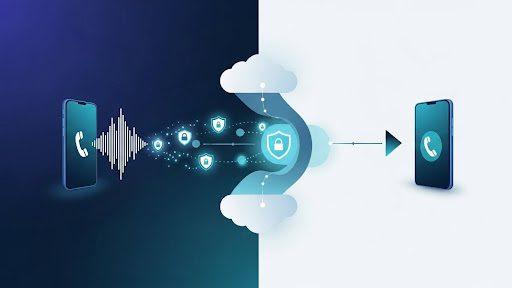
Modern virtual phone systems use sophisticated encryption to protect call data and ensure privacy. When you make a call using a virtual system, the voice data is converted into encrypted digital packets before transmission. This encryption makes it extremely difficult for anyone to intercept and decipher your conversations.
Two key encryption protocols protect virtual calls. Transport Layer Security (TLS) encrypts the signaling information, including caller and receiver details, preventing unauthorized parties from seeing whom you’re communicating with. Secure Real-Time Transport Protocol (SRTP) encrypts the actual voice content, ensuring that even if someone intercepted the data packets, they couldn’t understand the conversation. Together, these protocols create multiple layers of protection for your business communications.
Authentication Prevents Unauthorized Access
Beyond encryption, reputable providers implement robust authentication measures to prevent unauthorized access to your virtual phone system. Two-factor authentication (2FA) adds an essential security layer by requiring a second verification step, typically a code sent to your mobile device, before granting account access. Even if someone obtained your password, they couldn’t access your system without this additional verification.
Role-based access controls allow you to limit what different team members can do within your phone system. You might give customer service representatives the ability to handle calls while restricting administrative functions to managers. This granular control reduces the risk of internal security issues while maintaining operational efficiency.
Compliance Standards Provide Additional Assurance
Reputable virtual phone providers adhere to industry standards and regulations that ensure ongoing protection. These standards include HIPAA for healthcare data protection, SOC 2 for service organization controls, and GDPR for data privacy. Compliance with these frameworks demonstrates a provider’s commitment to security and provides legal protections for your business.
For businesses handling sensitive information, such as healthcare providers, legal practices, or financial advisors, compliance certifications are essential requirements that protect both your business and your clients.
What Are the Privacy Advantages of Virtual Phone Numbers?
Security and privacy aren’t the same thing, though they’re closely related. While security focuses on protecting your data from unauthorized access, privacy concerns your ability to control what information you share. Virtual phone numbers excel at both, offering privacy advantages that traditional phone systems can’t match.
Separating Personal and Professional Life
When running a small business or working from home, the line between personal and professional communications can blur quickly. Using your personal cell phone for business means sharing that number with clients, customers, vendors, and anyone else your business interacts with. This practice opens the door to work calls during family dinners, weekend interruptions, and your personal number appearing in business directories.
A virtual phone number creates a clear boundary. You can reserve your personal number exclusively for friends and family while using your virtual number for all business communications. When the workday ends, you can set your virtual number to go directly to voicemail or an after-hours message, protecting your personal time without missing important business opportunities.

Controlling Your Availability
Virtual phone systems give you unprecedented control over when and how you’re reachable. You can establish business hours for your virtual number, ensuring that calls outside those hours receive a professional voicemail greeting rather than ringing your phone at midnight. Auto-attendants can greet callers and direct them to the appropriate person or department, giving even solo operators the presence of a larger organization.
Call forwarding and routing options let you customize exactly how incoming calls are handled. You might route certain callers directly to your cell phone while sending others to voicemail or a live answering service. This flexibility ensures you’re available when you need to be while protecting your time when you don’t.
Building Client Trust Through Professional Communication
When you buy virtual numbers, using these dedicated business contacts also builds trust with clients and customers. Only your business number appears on caller IDs, keeping your personal number confidential. This professional presentation signals that you take your business seriously and respect appropriate boundaries.
For clients, knowing they’re calling a legitimate business number rather than someone’s personal cell phone provides reassurance. It suggests stability, professionalism, and a commitment to proper business practices.
What Should You Look for in a Virtual Phone Provider?
The benefits of virtual phone numbers are only as reliable as the provider you choose. Selecting a reputable provider with strong security practices is the most important step in ensuring your virtual communications remain safe and legitimate.

Essential Security Features to Evaluate
When comparing virtual phone providers, look for these critical security capabilities:
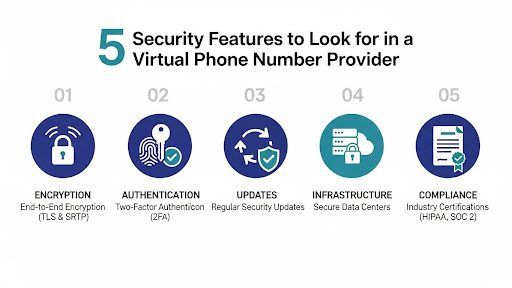
- End-to-end encryption: Both TLS for signaling and SRTP for voice content should be standard, not premium add-ons.
- Two-factor authentication: Account access should require more than just a password.
- Regular security updates: The provider should actively monitor for and address new threats and vulnerabilities.
- Secure data centers: Provider infrastructure should include redundancy, physical security, and regular audits.
- Compliance certifications: Look for HIPAA, SOC 2, or other relevant industry certifications based on your business needs.
Transparency about security practices matters as much as the practices themselves. Providers who clearly explain their security measures and readily answer questions demonstrate accountability.
Questions to Ask Before Signing Up
Before committing to a virtual phone provider, get clear answers to these essential questions:
What encryption technologies do you use? Look for Advanced Encryption Standard (AES) 256-bit encryption, the same standard used by financial institutions and government agencies. The provider should use both TLS and SRTP to protect different aspects of your communications.
How do you handle compliance requirements? For regulated industries, the provider should clearly explain how their service meets relevant standards. Healthcare businesses need HIPAA compliance, while companies handling payment information need PCI-DSS compliance.
What happens to my data? Understand where your call data is stored, how long it’s retained, and who has access to it. Reputable providers have clear data handling policies and will explain them without hesitation.
What support is available if something goes wrong? Security incidents require a fast response. Ensure your provider offers 24/7 support and has clear procedures for handling security concerns.
How often do you update security measures? The threat landscape constantly evolves, and your provider should evolve with it. Look for providers who regularly update their systems and communicate about security improvements.
What Are Common Concerns About Virtual Number Legitimacy?
Despite the widespread adoption of virtual phone technology, some misconceptions persist. Addressing these concerns helps you make decisions based on facts rather than outdated assumptions.
Do Virtual Numbers Look Different to Callers?
From the caller’s perspective, a virtual phone number looks and works exactly like any other phone number. Whether you choose a local number matching your area code, a toll-free 800 number, or a vanity number spelling out your business name, callers won’t know or care that it’s virtual. The call quality, connection reliability, and overall experience are indistinguishable from traditional phone service.
Can Virtual Numbers Be Traced?
Virtual numbers are registered with telecommunications providers just like traditional numbers. They can be traced by law enforcement with proper legal authority, which is actually a feature, not a bug. This traceability means bad actors can’t hide behind virtual numbers, which contributes to the overall legitimacy of the technology.
Are Free Virtual Numbers Safe?
Free virtual phone number services often come with compromises. They may use recycled numbers that still receive calls for previous users, lack essential security features, or monetize your data in ways that compromise privacy. For business use, investing in a reputable paid service provides the security, reliability, and professional features your business needs.
Businesses typically spend between $20 and $30 per user monthly for quality VoIP service, a modest investment compared to the security and capability benefits received.
What’s the Cost-Benefit Reality of Virtual Numbers?
Beyond security considerations, virtual phone numbers offer compelling practical advantages. Understanding the full picture helps you evaluate whether virtual phone systems make sense for your business.
Businesses that switch to virtual phone systems can save up to 60% on their communication costs compared to traditional phone service. These savings come from eliminating hardware expenses, reducing long-distance charges, and consolidating multiple communication tools into a single platform. For small businesses watching every dollar, these savings can be substantial.
The flexibility benefits are equally appealing. When you get a virtual number online, it works wherever you have internet access, supporting remote work, business travel, and distributed teams. Features like video meetings, voicemail transcription, and integration with business software enhance productivity.
Frequently Asked Questions
Are virtual phone numbers legal for business use? Yes, virtual phone numbers are completely legal and widely used by businesses of all sizes. They’re regulated by the same telecommunications authorities that oversee traditional phone services and comply with all applicable laws and regulations.
Can I port my existing business number to a virtual phone system? Most virtual phone providers support number porting, allowing you to keep your existing business number while gaining the benefits of a virtual system. The process is typically completed within 15 business days, though some requests can take longer. You’ll receive a temporary number to use during the transition.
What happens if my internet goes down? Reputable virtual phone providers offer failover options, such as automatically forwarding calls to a backup number or mobile phone when your primary internet connection is unavailable. This redundancy ensures you don’t miss important calls during outages.
Are virtual phone numbers secure enough for sensitive business conversations? When obtained from a reputable provider using proper encryption protocols, virtual phone numbers are as secure as or more secure than traditional phone lines. For businesses in regulated industries, look for providers offering HIPAA compliance or other relevant certifications.
How do I buy a virtual number online? Getting a virtual number online is straightforward. Choose a provider, select your plan, pick your preferred number type (local, toll-free, or vanity), and complete the signup process. Most providers have your number active within minutes.
Making the Right Choice for Your Business
Virtual phone numbers are legitimate, secure, and essential business communication tools. The technology has matured over decades, the security measures have become sophisticated, and the benefits are clear.
Focus on providers with transparent security practices, strong compliance certifications, and responsive customer support. Evaluate their encryption standards, ask direct questions about data handling, and ensure they meet any industry-specific requirements your business faces. With the right provider, you’ll gain flexible, professional communication capabilities while maintaining the security your business requires.
Phone.com delivers the security features, compliance certifications, and reliability that small businesses need. With advanced encryption, HIPAA compliance, and 24/7 US-based support, you can communicate confidently while keeping your personal and business life separate. Explore plans and pricing to find the right fit for your business communication needs.